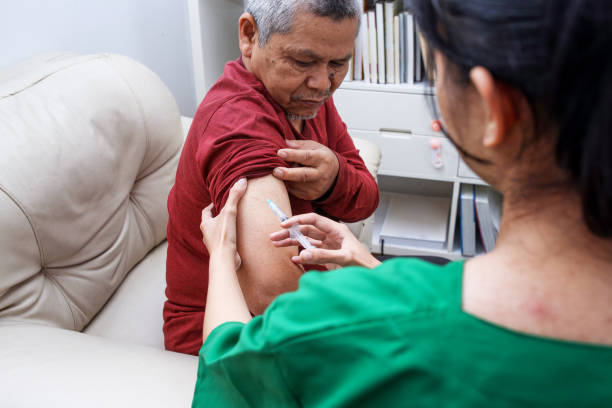
When 54-year-old Sunita Rao returned from what she thought was a routine bout of “monsoon flu”, she expected to recover in a few days. She walked five kilometres every morning, ate her vegetables, kept her weight under control and never missed her annual health check-up. Yet within a week, fever, cough and breathlessness landed her in a Pune hospital with pneumonia. “How did this happen to me?” she asked her pulmonologist. The answer surprised her. Her lifestyle had certainly helped, but there was another gap in her preventive care. Sunita had not received a single vaccine since childhood. When her doctor asked, “When was your last adult vaccination?”, she could not remember. Sunita’s story is not unusual. In India, vaccination is still largely seen as something that belongs to childhood. Once children complete their school-age vaccines, adults often assume that their vaccination journey is over. That assumption can leave a significant gap in preventive healthcare, particularly as people grow older and become more vulnerable to infections and their complications.
India has made enormous progress in childhood immunisation, but adult vaccination remains one of the less developed areas of preventive healthcare. The Longitudinal Ageing Study in India (LASI), one of the country’s largest studies of older adults, provided an early indication of the problem. Among adults aged 45 years and above, only about 1.5 per cent reported having received an influenza vaccine and 0.6 per cent a pneumococcal vaccine. Coverage of other adult vaccines was similarly low. These figures become more significant against the backdrop of India’s rapidly ageing population and the growing burden of diabetes, cardiovascular disease, chronic lung disease, kidney disease and other conditions that can make infections more severe. The latest National Sample Survey (NSS) provides a broader picture. The NSS 80th Round Household Social Consumption Survey on Health, conducted in 2025, is the first large national survey to provide detailed information on vaccination across the adult age spectrum. Analysis of its unit-level data found vaccination coverage of approximately 1.98 per cent among adults aged 18 years and above. Among those aged 50 years and above, coverage fell to 0.43 per cent, and among people aged 60 years and above, to just 0.40 per cent. Put differently, fewer than one in 200 Indians aged 60 and above had received a vaccine captured by the survey. There is an important caveat to these figures. They do not mean that 99.6 per cent of older Indians have never received any vaccine in their lifetime. The NSS measure captures vaccination according to the survey’s defined vaccination module and includes different vaccines and circumstances. Even with that qualification, however, the numbers point to how limited routine adult immunisation remains in India.
Growing older does not make people immune to infections. In fact, the reverse can happen. Ageing is associated with immunosenescence, a gradual change in immune function that can reduce the body’s ability to respond effectively to infections. Chronic conditions such as diabetes, heart disease, chronic respiratory disease, kidney disease and liver disease can further increase the risk of complications. This is why vaccination becomes an increasingly important part of healthy ageing. For an older adult or someone living with a chronic disease, preventing an infection is not merely about avoiding a few days of fever or discomfort. It can mean avoiding pneumonia, hospitalisation, loss of independence and a prolonged disruption to everyday life. Influenza illustrates the point. Indian expert recommendations recognise older adults, people with chronic diseases, pregnant women, healthcare workers and other high-risk groups as important candidates for influenza vaccination. Pneumococcal disease is another concern. Pneumococcus can cause pneumonia and invasive infections, with the greatest risk among older adults and people with certain underlying conditions. Indian recommendations therefore focus pneumococcal vaccination on older adults and younger adults with specific risk factors rather than treating it as a universal vaccine for every healthy adult.
Unlike childhood vaccination, adult immunisation does not follow a single fixed schedule. The Association of Physicians of India (API) 2024 Indian Consensus Guideline on Adult Immunisation, developed with specialist organisations, takes a life-course and risk-based approach. Age, previous vaccination, medical conditions, occupation, travel, pregnancy and other exposures can all influence which vaccines an individual should receive. For many adults, influenza vaccination is an important consideration. Annual vaccination is particularly relevant for older adults, people with chronic illnesses, healthcare workers and other high-risk groups. Because influenza viruses change over time, vaccination needs to be repeated regularly. Indian expert recommendations support routine influenza vaccination for adults aged 60 and above and for adults with important comorbidities. Pneumococcal vaccination is particularly relevant for older adults and younger adults with conditions such as diabetes, chronic heart, lung, liver or kidney disease, a history of smoking or immunocompromising conditions. The appropriate vaccine and sequence should be determined by a physician based on age, risk factors and previous vaccination. Tetanus, diphtheria and pertussis (Td/Tdap) boosters remain important even when childhood vaccination was completed. Indian adult immunisation recommendations generally include periodic Td/Tdap vaccination, with a 10-year booster interval in many adult schedules. Herpes zoster, commonly known as shingles, is another age-related concern. Recombinant zoster vaccination is recommended for adults aged 50 years and above in current Indian consensus recommendations. Since shingles can cause prolonged pain and other complications, prevention becomes particularly relevant as people age. Hepatitis B vaccination may benefit adults who remain susceptible, particularly healthcare workers and people with specific occupational, medical or exposure-related risks. HPV vaccination is primarily aimed at preventing HPV-related cancers and is most effective when given before exposure, although catch-up vaccination may be appropriate for selected adults depending on age and circumstances. Other vaccines, including hepatitis A, MMR, varicella, meningococcal, Japanese encephalitis and rabies, may be recommended for particular individuals based on travel, occupation, previous immunity or medical risk. The point is not that every adult needs every vaccine. Adult vaccination is personalised preventive medicine, and the appropriate package depends on the individual.
One reason for the low uptake is simply perception. Many Indians continue to think of vaccines as something meant for children. There is also no universally used adult vaccination card comparable to the familiar childhood immunisation record. Adults may not know which vaccines they received decades ago, while doctors may not routinely ask about their vaccination history. Cost and access are additional factors. Unlike childhood vaccines delivered through India’s Universal Immunisation Programme, many adult vaccines are obtained through the private healthcare system. The latest NSS analysis suggests that adult vaccination in India remains heavily dependent on private-sector access, with tetanus vaccination, particularly associated with antenatal care, accounting for a large share of recorded adult vaccination. This creates a cycle that is difficult to break. If adults do not think they need vaccines, they are less likely to ask for them. If they do not ask, vaccination is less likely to become part of a routine consultation. And if doctors do not routinely raise the subject, many adults may never realise that they have vaccines due.
Closing this gap does not necessarily require individuals to navigate another complicated health programme. A vaccination review can simply become part of an ordinary health check-up, alongside familiar checks for blood pressure, blood sugar, cholesterol and cancer screening. At the next appointment, an adult can ask three basic questions: Which vaccines am I due for at my age? Do any of my existing medical conditions increase my risk? When was my last vaccination, and what should I receive next? Doctors, too, can make adult vaccination a routine part of preventive care, particularly when seeing patients over 50 or 60, people with chronic diseases, pregnant women, healthcare workers and other high-risk groups. A few minutes spent reviewing vaccination history may prevent a serious infection and, in some cases, a hospital admission.
Sunita eventually recovered from her pneumonia. At discharge, however, her doctor gave her something she had not expected to see on a medical prescription: a plan for catch-up vaccination. She had always assumed that vaccines were something she had finished with as a child. “Turns out”, she told her doctor, “I wasn’t past the age for vaccines. I was exactly at the age when I needed to start thinking about them again.” That may be the message India needs to hear. We service our cars, renew our insurance and schedule annual health checks. Vaccination deserves the same preventive mindset, particularly as the population ages and more people live with chronic conditions. Childhood may be where vaccination begins, but protection should not end there. For every adult, particularly after 50, and earlier when chronic disease or other risk factors are present, the next health check-up could include one simple question: “Which vaccines do I need now?” (Dr Anish Desai is a healthcare entrepreneur. He is heading IntelliMed Healthcare Solutions, Pune)