
From airport shutdowns to military drills and emergency training, governments are preparing citizens for a more dangerous security environment.
Europe is not at war, but it is surely living in fear. A series of drone incidents recently, growing military preparedness and fears of a wider conflict are forcing governments to reconsider how they protect their citizens. From Germany’s airport security measures to Poland’s civilian training programmes and the Nordic countries’ emergency preparedness systems, Europe is taking steps to prepare for a security environment in which the threat may no longer be confined to a conventional frontline.
The anxiety was palpable in Cologne, Germany, on September 10, when the fire department activated all 136 sirens at 11 am, and every citizen’s phone received an alert, even in silent mode. The incident captured a growing concern across Europe: the fear that conflicts elsewhere could increasingly affect everyday life at home.
Drones Trigger Airport, Military Alerts
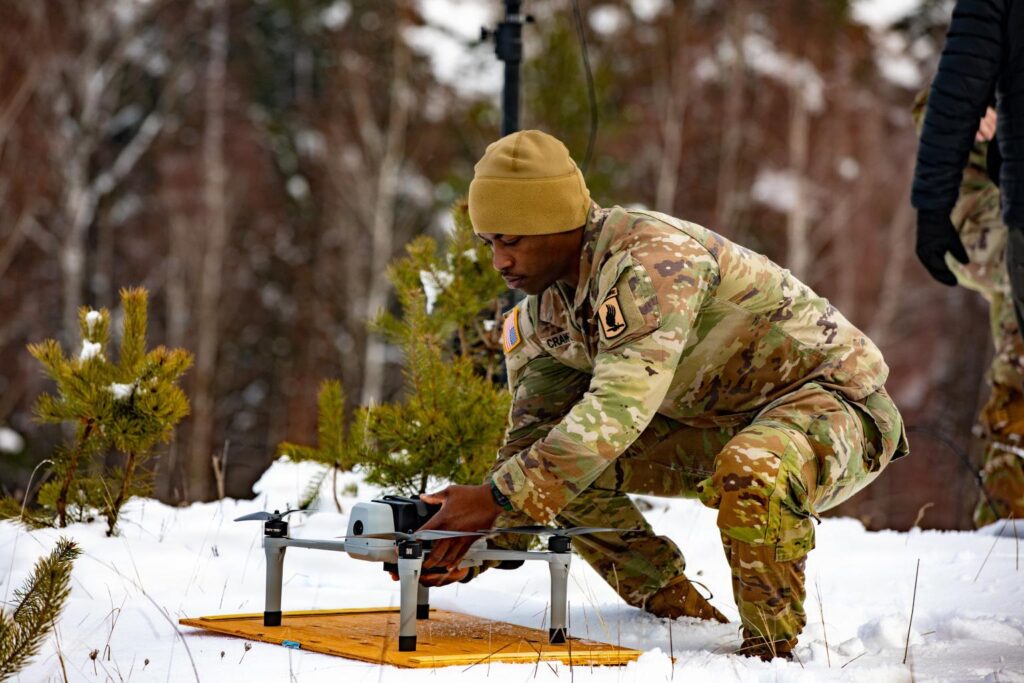
Drones have emerged as a particular source of concern because they can appear above airports and power plants without an identifiable operator or a clear indication of their purpose.
Germany’s air traffic control service, DFS, recorded 145 drone-related disruptions in the first half of 2026. By the end of September, the number had reached 172. Berlin Brandenburg Airport recorded 28 sightings in the first half of the year, more than any other German airport. On September 23, a drone sighting grounded flights there for about 45 minutes.
The incidents have raised concerns beyond civilian aviation. On the night of August 4, an explosive-laden drone was found in Leipzig/Halle, a cargo hub used to support Ukraine. Two days later, two drones were spotted over a Bundeswehr base in North Rhine-Westphalia.
Luxembourg’s only international airport was also forced to close on the evening of September 18 after unauthorised drones were spotted. Nineteen flights were diverted to other airports. The airport closed again within the same week, but no drone was recovered or identified in either incident.
Germany is expanding its detection capabilities. Since October 5, the airports in Stuttgart and Hamburg have had a drone detection system operated by DFS, bringing the number of the country’s eight major airports equipped with such systems to seven.
Detection, however, is not the same as defence. Baden-Württemberg’s transport minister has described the measure as a temporary solution.

Ukraine, Middle East Conflicts Fuel European Anxiety
The war in Ukraine has increasingly become a European security concern beyond Ukraine’s borders. In mid-September, Russia launched 863 drones against Ukraine in 24 hours. Polish and Ukrainian officials said a Russian drone had struck a Warsaw-bound train just inside Ukrainian territory, near the Polish border.
A few days later, Polish Prime Minister Donald Tusk told parliament that Russia was planning hybrid drone or missile attacks against countries supporting Ukraine, with any subsequent official explanation likely to describe the incident as an accident.
The Baltic region has also tested NATO’s response. On the night of September 14-15, Italian Eurofighters participating in a NATO air-policing mission shot down a drone that had entered Lithuanian airspace from Belarus. Lithuanian authorities neutralised the explosive device it was carrying. Italy’s Defence Minister, Guido Crosetto, said the drone most likely originated from Russia.
NATO’s Supreme Allied Commander in Europe is preparing a strategy to counter a possible Russian incursion on the eastern flank, using inexpensive drones and artificial intelligence-assisted targeting. Poland has drafted legislation to accelerate the deployment of allied troops.
The preparations reflect a continent increasingly focused on how it would respond to a wider confrontation.
The conflict involving the United States, Israel and Iran, which the article dates to February 28, 2026, has added another dimension to Europe’s security concerns. The closure of the Strait of Hormuz has disrupted global trade.
For Europeans, the consequences of the Middle East conflict extend beyond the battlefield. They are felt through security alerts, energy costs, migration debates and polarised protests.
Caught between the eastern European security threat and the conflict in the Middle East, Europeans are not combatants, but neither are they mere spectators. The concern is not necessarily an imminent invasion, but the possibility that multiple conflicts could spill into everyday life.
Governments Diverge on Preparedness
European governments are responding in different ways, from voluntary military service to civilian training and emergency planning.
In Germany, military service remains voluntary. Starting in 2026, young men must complete a questionnaire, while participation is optional for women. The government retains the option of introducing compulsory service if voluntary recruitment falls short.
The article reports that 298,200 questionnaires had been sent out by mid-June, while 530 volunteers had signed up after five months, despite more than one in five young people expressing interest.
France has opted for a voluntary national service programme for people aged 18 to 25. The ten-month programme, comprising one month of training and nine months of service in France, is being rolled out progressively starting in September 2026. The government aims to recruit 3,000 young people in 2026, 10,000 annually by 2030 and 50,000 by 2035.
Volunteers will receive at least €800 a month, along with accommodation, food and equipment. The programme does not envisage deployment in foreign operations or conflict zones.
Poland is taking a broader approach to civilian preparedness. Its voluntary programme, W Gotowości (In Readiness), launched on November 22, 2025, provides training in survival, first aid, home security and cyber hygiene. The target is to train 400,000 people in 2026, from schoolchildren to retirees. Registration is handled through the mObywatel app.
Poland has allocated 4.8 per cent of GDP to defence in 2026, the highest share within NATO, cited in the article.
The Nordic countries offer a more established model of preparedness. Norway extended compulsory military service to women in 2015, while Sweden reintroduced conscription in 2017. Denmark began bringing about 1,600 young people into barracks for an 11-month service on August 3, 2026, with 18-year-old women included in the same selection system as men.
Finland focuses on mass mobilisation, with peacetime forces accounting for 11 per cent of its wartime strength.
Civilian preparedness is equally important. Sweden has distributed its If Crisis or War Comes booklet to every household for the first time in 57 years and expects families to be able to manage for a week without outside assistance. Its civil shelters number around 64,000-65,000, with capacity for approximately seven million people.
Norway has mailed 2.2 million copies of its preparedness booklet, one for every household. Finland’s 72 Hours campaign teaches essential survival skills, while residents aged 18 to 68 are required to participate in rescue and civil-protection duties.
Italy faces a different challenge: communicating military preparedness to a public increasingly sensitive to the possibility of escalation.
Aircraft are scheduled to operate from Ghedi, Aviano, Amendola, Gioia del Colle and Trapani, along flight corridors crossing Italy. Drones will also be deployed.
NATO has also swung into action. NATO’s annual Steadfast Noon nuclear deterrence exercise is scheduled to begin on October 13 and last ten days. No actual nuclear weapons are used during the exercise.
NATO’s nuclear policy chief, Nassima Barrows, has described the exercise as routine and said it is not directed against any country, while acknowledging an increase in Russian nuclear rhetoric.
Both the routine nature of the exercise and the public anxiety surrounding the word “nuclear” can coexist, the author argues. The problem is that information may be technically available but practically invisible to the people who need it.
Trust Key to Civil Defence
Germany’s rising defence expenditure illustrates how the changing security environment is translating into government policy. Defence spending is expected to reach €108.2 billion in 2026, a level unseen since the end of the Cold War. At the end of May, the Bundeswehr had 185,608 active-duty personnel.
But preparedness also raises questions about who may eventually be called upon to serve. For 20-year-old Ernst, the prospect of conscription in Germany is a personal concern. He belongs to the generation that would be called up first.
Europe’s challenge is not simply to strengthen its military defences. It must also help citizens distinguish between genuine threats and precautionary measures, understand what to do in an emergency, and retain confidence in the institutions responsible for their safety.
For three generations, many Europeans treated peace as a natural condition. The new security environment is forcing them to reconsider that assumption. The task is to avoid both denial and panic, and to make preparedness part of everyday life without allowing fear to dictate how the continent responds.
(Giorgia Pietropaoli is an Italy-based writer and investigative reporter. She specialises in the Middle East, with a particular focus on Iran and Afghanistan, and human rights)