
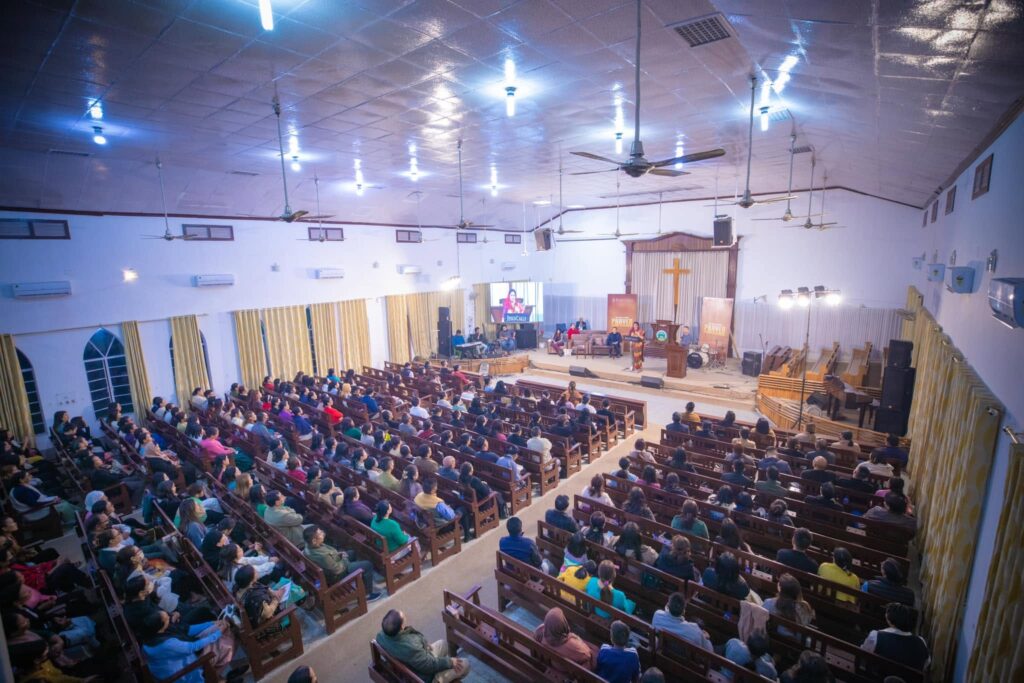
Shifting values and questions of accountability are challenging the Church’s traditional authority in Naga society.
Nagaland, a state with an overwhelming Christian population of 87.93 per cent (as per the 2011 Census), the Church’s influence extends far beyond Sunday worship. It shapes family relationships, marriage, moral expectations, social conduct and community identity. For generations, church membership has provided people with a religious community and a framework for understanding their responsibilities towards family and society.
But some Naga Christians are questioning aspects of religious authority, inherited moral expectations and the conduct of church leaders, even as they continue to believe in Jesus Christ. Their experiences raise questions about how the Church responds when personal choices, changing social realities and concerns about institutional accountability challenge established expectations.
Take the case of Nasset Chollen of Tuensang, whose trust in pastors was deeply shaken by the allegations of sexual misconduct involving former Father’s House Church pastor Robert Kikon.
In September 2024, the church board in Chumoukedima, near Dimapur, announced Kikon’s resignation after what it described as his “immoral acts” came to light. The allegations concerned sexual misconduct involving male minors. On October 5, 2024, the church filed a police complaint against him, and a case was registered under the Protection of Children from Sexual Offences (POCSO) Act.
Nasset’s experience highlights the distinction between faith in Christianity and confidence in religious leadership, raising questions about the accountability of institutions that command considerable trust within Naga society.
Vinikali Achumi from Zunheboto also raised concerns connected with cases involving the alleged sexual exploitation of children and child labour. Her concerns reflect anxieties about whether institutions entrusted with moral guidance are adequately protecting vulnerable people.
For the Church, the consequences of such cases can extend beyond the individuals directly involved. Congregants may begin questioning how leaders are selected, how complaints are handled and whether people who report misconduct will receive a fair hearing.
These accounts do not establish that trust in Naga churches is declining across the board. They reveal the personal consequences that can follow when the conduct of religious leaders comes under question.
The Church and Naga Society
Christianity reached Naga communities through American Baptist missionary efforts in the nineteenth century. In 1839, missionary Miles Bronson established a mission at Namsang, in present-day Arunachal Pradesh. A more sustained Christian presence in the Naga Hills emerged in the early 1870s through the work of Edward Winter Clark and the Assamese evangelist Godhula. In 1872, the baptism of Ao Naga converts and the establishment of a church at Molungkimong marked a significant milestone in the spread of Christianity in the region.
Over subsequent decades, the faith expanded through missionary activity, the efforts of Naga converts and the establishment of churches and schools. According to the 2011 Census, Christians constituted 87.93 per cent of Nagaland’s population.
The Church has since played a significant role in education, community organisation, social welfare and the formation of collective identity. Its influence extends into family relationships, marriage, music, social conduct and expectations surrounding community life.
For many Naga Christians, faith begins in childhood. Prayer, Sunday worship, church attendance and participation in religious activities become part of family life. Religious commitment is often assessed through visible behaviour, including church attendance, participation in prayer meetings and adherence to established moral expectations.
But education, migration, professional employment, social media and exposure to different cultural environments are changing the circumstances in which Naga Christians practise their faith. Some seek a more personal understanding of their beliefs. Others remain deeply committed to established religious practices. Some express disappointment with church leadership while continuing to believe in Jesus Christ.

Changing Values, Challenging Traditions
Mosa Sangtam of Dimapur describes changes in the way people engage with church services. Practices that were once widely accepted, including lengthy prayers and sermons, may now be received differently by some worshippers. Language has also become part of the discussion, with English increasingly preferred in certain settings where local languages once held a stronger place.
For Mosa, the issue extends beyond the format of a service. He believes the Church needs to pay closer attention to the aspirations and difficulties of younger people.
Questions about drinking alcohol, listening to rock music and other aspects of everyday life can lead people to examine the relationship between Christian teaching and individual conduct. For some families and congregations, particular musical styles may raise concerns about moral conduct. Others place greater emphasis on personal conviction, relationships, service and the values guiding everyday decisions.
Robert Kamei of Tamenglong in Manipur has observed differences in the way young people respond to Christianity. Some become more involved in religious life, while others move away from established commitments. Education and exposure to other ideas may strengthen one person’s religious conviction while prompting another to question inherited beliefs or church authority.
Keakong T of Tuensang identified social media, contemporary music and modern lifestyles as influences on young people’s faith and attitudes towards Christianity. Digital platforms expose people to religious ideas, cultural practices and personal experiences that may receive limited attention within their immediate communities.
The Nagaland Baptist Church Council’s Youth Department identifies fellowship, leadership development, music, cultural exchange and life skills among its areas of youth engagement.
Public discussions about Naga Christianity have also raised concerns about changing values and the pressures of contemporary life. In a March 2026 commentary in Nagaland Post, Akumnaro Ozukum examined the relationship between postmodern influences, social change, ancestral values and Christian hope. In a June 2025 article in The Morung Express, Vikiho Kiba discussed foreign religious movements among some Naga youth and questioned whether church leadership adequately addresses their spiritual and intellectual concerns.
For T. Sangtam of Dimapur, the changing relationship between Naga Christians and the Church raises a question that goes beyond Sunday service attendance. Young people remain actively involved in church activities, but participation alone does not reveal what faith means to them. Sangtam asks whether their involvement stems from a genuine desire for spiritual growth and personal transformation or whether, for some, it has become a social expectation.
“The question also extends to older churchgoers. Do people attend Sunday services out of conviction, or are they influenced by a sense of obligation, fear of judgement and pressure to conform to community expectations? These questions point to a deeper issue in contemporary Naga Christianity: the distinction between practising religion as a public routine and embracing faith as a personal conviction,” he said.
Relationships, marriage and personal freedom
The questioning of established expectations also extends to relationships and marriage, where religious teaching, family expectations and community traditions often intersect.
In many Naga communities, decisions about relationships involve several overlapping considerations. Christian teaching influences ideas about sexual conduct and marriage. Families may place importance on clan affiliation, community identity and social compatibility. Individuals also bring their own expectations about affection, partnership and personal choice.
Mosa Sangtam of Dimapur identified family expectations, clan restrictions and Christian teaching on premarital sex as factors influencing young people’s decisions about relationships. For someone who wishes to choose a partner independently, the consequences may extend beyond the relationship itself. Family approval, social acceptance and future marriage arrangements can all become part of the decision.
As younger Nagas encounter new educational, professional and social environments, some may reassess how family expectations, clan affiliations and customary obligations should influence their personal choices. Those questioning established restrictions may also reconsider the authority that families, customary institutions and the Church exercise over private life. Others continue to regard these structures as essential to community identity and social responsibility.
The experience of a Naga woman in Bengaluru illustrates the personal nature of these questions. A devout Christian, she found herself drawn to another woman after a church service. They met again, conversations grew longer, and affection developed between them. When she realised that her feelings were mutual, she recalled being pleasantly surprised. It was a deeply personal discovery, one that opened questions about love, faith and the expectations surrounding her life.
Her account does not establish how widespread same-sex attraction is among Naga Christians. It illustrates how questions of intimacy and identity can emerge within communities where Christian teaching and family expectations strongly influence personal relationships. For some individuals, such questions can be discussed openly with trusted people. For others, fear of judgement may make silence seem safer.
Marriage is also shaped by changing economic pressures and social expectations. Atsoba Anar, a community leader and politician from Kiphire, expressed concern that dating, break-ups and weddings are becoming commercialised.
Atsoba also observed that young people are sometimes classified as either “permissive” or “Spirit-filled”. In his account, people may be described as “blessed” or “cursed” according to how others interpret their religious conduct.
These labels can influence how individuals are treated within a congregation or community. They can reduce complex personal experiences to judgements about religious commitment, leaving limited room for uncertainty, personal struggle or gradual change.
Private cost of silence
The pressures surrounding religious life can become especially serious when people experience harm within their own households. One woman described experiencing physical abuse within her marriage, a reality she had not shared with church leaders. Her silence raises difficult questions about the support available to people experiencing domestic violence. Churches may be among the first places where individuals seek help, particularly in communities where religious institutions play a central role in social life. Yet a person may hesitate to speak about abuse because of concerns about privacy, family reputation, marriage and the consequences of making a complaint.
Some people may fear that they will not be believed. Others may worry about being blamed for difficulties in their marriage or pressured to preserve the relationship. A person who depends on a spouse financially or socially may also face significant obstacles to seeking help.
Religious teaching can provide comfort and encourage reconciliation, but responses to abuse require careful attention to the safety and dignity of the person experiencing it. Prayer and pastoral counselling may offer emotional support. They cannot replace appropriate protection, medical care, legal assistance or referral to specialist services when these are needed.
The woman’s account does not establish how common such experiences are among Naga Christians. It shows that domestic abuse can remain hidden even within communities where people have access to religious leaders and collective support.
Can people speak confidentially when they seek help? Do church leaders have the training and resources to recognise abuse and guide those affected towards appropriate support? How do congregations respond when the problems people face are difficult to discuss publicly?
These questions concern the practical meaning of pastoral care. A religious community’s response to people experiencing harm can shape whether they feel safe enough to seek help.
A Church in Transition
Various personal and community accounts reveal different ways of negotiating faith in contemporary Naga society. Some people question inherited expectations. Others seek deeper religious commitment. Some continue to find meaning in established forms of worship, while others negotiate faith alongside new work arrangements, cultural influences and personal relationships.
Professional employment and migration have changed the circumstances in which many Naga Christians live. Luingamla Zimik, who was born and brought up in Ukhrul in Manipur and is married to a man from Nagaland, describes how these changes have affected her family’s religious observance.
“Growing up, we were used to a way of life in which Sunday was reserved for the Lord. In Ukhrul and Nagaland, almost everything would be closed on Sundays. That was the world we knew. But when we moved out for work, we realised that things were very different elsewhere. My office operates on Sundays, and Monday is my weekly holiday. My husband serves in the merchant navy, where work continues throughout the week. On board his ship, there is no conventional weekly holiday.”
Her experience shows how employment can affect the practical expression of religious commitment. In communities where Sunday closures have traditionally shaped public life, working outside the region can make established routines difficult to maintain.
Social media can expose people to different interpretations of Christianity. Relationships may raise questions about family approval, sexual identity and marriage. Allegations involving religious leaders can affect confidence in institutions that have long occupied a central place in community life.
These developments do not, by themselves, demonstrate that Christianity is losing its influence among the Nagas. Large religious gatherings, active church organisations and personal accounts of renewed commitment show that faith continues to hold considerable meaning for many people.
The December 2025 Revival and Healing Festival, for example, drew large crowds according to estimates reported by Nagaland Post. The attendance figures were based on organisers’ estimates and were not independently audited.
The accounts presented here cannot establish how widespread particular attitudes or experiences are across Naga society. They do, however, raise questions about pastoral care, communication, safeguarding and the place of younger members in religious life.
For church leaders, the challenge is to understand what worship means to different generations, respond to concerns about misconduct and provide space for difficult conversations. For families, the questions concern how expectations surrounding relationships, marriage and community responsibility affect individual choices.
The Church remains central to the lives of many Nagas. How it responds when people raise difficult questions about relationships, personal choices and institutional accountability will influence its relationship with future generations.
(Dr Aniruddha Babar is an academician and policy Analyst. He founded the Eastern Gateway Foundation and Project Constitutional Justice in Nagaland, and is co-founder of the Centre for North-East Development and Policy Research, Manipur)