
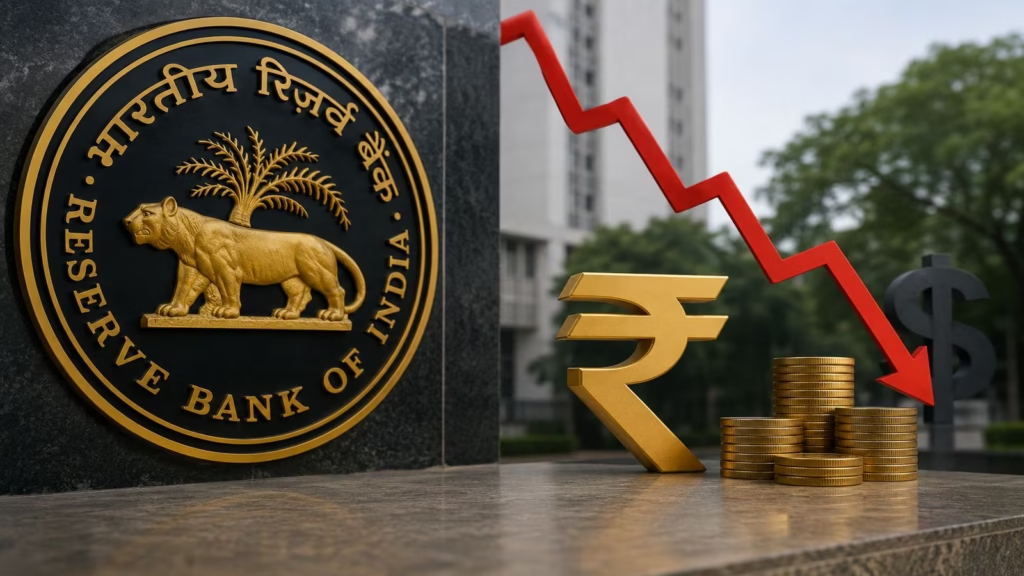
Reuters reports that the RBI has deployed an estimated $75–80 billion through dollar sales and currency swaps since June, after India mobilised more than $140 billion through special foreign-exchange measures. The intervention comes amid high oil prices, rising US Treasury yields and foreign investor outflows. India’s forex reserves fell to $726 billion in the week ended 9 October, from a peak of $785.7 billion in early September.
1. Is India facing a currency crisis?
India is facing significant pressure on the rupee, but that does not automatically mean the country is in a currency crisis. The rupee has weakened amid rising oil prices, foreign portfolio outflows and higher US Treasury yields, which can make dollar assets more attractive. A weaker rupee also makes imports more expensive, adding to inflationary pressure. The RBI has intervened to moderate the currency’s decline and reduce volatility. The scale of intervention and the recent fall in reserves are reasons for concern. However, determining whether India faces a currency crisis requires examining its external payment obligations, reserve adequacy, capital flows and ability to meet demand for foreign currency.
2. What exactly is the RBI’s $80 billion defence?
According to Reuters, economists estimate that the RBI has deployed $75–80 billion through spot dollar sales and dollar-rupee swaps since 8 June 2026. The estimate was calculated using changes in weekly reserves, adjusted for valuation effects, and cross-checked against market participants’ assessments. It is not an official RBI disclosure of money lost or permanently spent. In a spot-market intervention, the RBI sells dollars and receives rupees, increasing the supply of dollars in the market. This can ease pressure on the rupee. In a sell-buy currency swap, the RBI sells dollars now and agrees to buy them back later. Such transactions can absorb surplus rupee liquidity and alter the timing of foreign-currency flows, but they create future obligations. The distinction matters: an outright dollar sale and a reversible swap do not have the same effect on the RBI’s balance sheet.
3. Why did India mobilise more than $140 billion in foreign currency?
The RBI introduced special measures in June to attract foreign-currency inflows and strengthen its external buffers. The measures included incentives for banks to attract Foreign Currency Non-Resident (Bank), or FCNR(B), deposits, as well as concessional swap arrangements for eligible foreign-currency borrowings. Reuters reported on September 21 that the arrangements had attracted $143.6 billion by September 18. FCNR(B) deposits accounted for the bulk of the reported inflows, while overseas foreign-currency borrowings and external commercial borrowings contributed the remainder. These inflows gave the banking system access to additional foreign currency. But they should not be mistaken for permanent, debt-free additions to national wealth. Deposits have maturity dates, and foreign-currency loans must be repaid. The terms of each arrangement determine the associated obligations and risks.
4. If the RBI raised $140 billion, why is it using so much to defend the rupee?
The inflows did not remove the underlying demand for dollars. India needs foreign currency to pay for crude oil and other imports. Foreign investors selling Indian assets can also convert their proceeds into dollars and move money overseas. Higher US yields can intensify this pressure by making dollar investments more attractive. The RBI has responded by selling dollars and using swaps to manage market liquidity. Reuters estimated that these operations accounted for $75–80 billion of deployment since June. The RBI has also introduced additional measures to manage demand. In October, it opened a special dollar window for three state-owned oil marketing companies and tightened certain foreign-exchange derivative rules. The oil-company arrangement redirects some dollar purchases away from the regular spot market. It may reduce concentrated demand in that market, but it does not eliminate the dollars required to pay for imported crude.
5. How serious is the fall in India’s foreign-exchange reserves?
India’s headline foreign-exchange reserves fell to $726.03 billion in the week ended October 9, 2026, according to RBI data reported by Reuters and other financial news outlets. They had reached $785.71 billion in the week ended 4 September. That is a decline of approximately $59.7 billion in five weeks. The fall is substantial, but it cannot all be attributed to dollar sales. Reserve values also change when the prices of gold and the dollar value of other currencies held by the RBI fluctuate. The composition of reserves matters, too. Headline reserves include foreign-currency assets, gold, special drawing rights and India’s reserve position with the IMF. Forward foreign-exchange obligations must also be considered when assessing the RBI’s future position. The central question is whether India can maintain adequate external buffers while meeting import requirements and other foreign-currency obligations if the pressure continues.
6. What happens if the rupee keeps falling, and what would signal a crisis?
A weaker rupee raises the domestic cost of dollar-priced imports, particularly crude oil. It can increase costs for businesses that depend on imported machinery, electronics and industrial inputs. Companies with unhedged foreign-currency debt may also face higher repayment costs. Exporters earning dollars may benefit from receiving more rupees for their foreign-currency earnings, although the benefit depends on their imported inputs, debt and hedging arrangements. A sustained decline in reserves, persistent capital outflows, rising external financing needs and growing difficulty meeting foreign-currency obligations would warrant greater concern. Conversely, stabilising oil prices, stronger capital inflows and a reduction in dollar demand could ease pressure. The evidence points to serious currency stress, not proof of a full-blown currency crisis. The $75–80 billion intervention estimate highlights the scale of the RBI’s response, while the decline in reserves shows why the position needs close monitoring. The decisive test is whether India can withstand continued external pressure without a damaging loss of confidence or an inability to meet its foreign-currency obligations.