
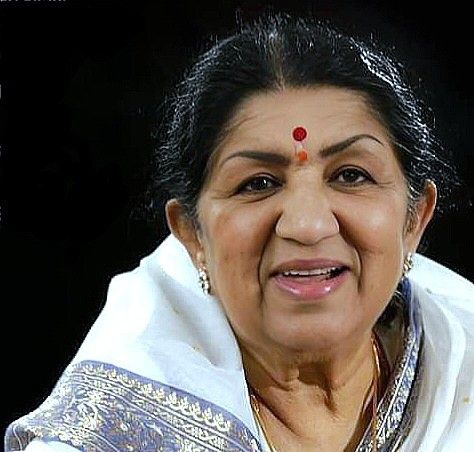
Lata Mangeshkar’s 97th birth anniversary has just passed, but time seems to have little hold over a voice that continues to inhabit the hearts of millions. More than four years after she left us on February 6, 2022, her music remains as evocative as ever, reminding us that some voices do not merely sing for a generation; they become part of a nation’s collective memory. Among her many enduring melodies is ‘Kuchh dil ne kaha’ from the film Anupama (1966), a beautiful composition with Kaifi Azmi’s lyrics and Hemant Kumar’s music.
Sung by Lata Mangeshkar, who lent her voice to Sharmila Tagore, the lead actress in the film, this song brought together artistes whose backgrounds offer an immediate reminder that music transcends the boundaries of religion, geography, history, politics, colour and culture, boundaries that blur away in all higher forms of human involvement, including science and sports. Clearly, every Indian continues to feel the absence of Lata-ji deeply, even as her music endures more than four years after her passing.
People from different states came together in remembering the martyrs who fought for the nation when Lata-ji appealed, “Ai mere watan ke logon, zaraa aankh mein bhar lo paani” (people of my nation, let us join in mourning …), in the sombre notes of her voice. She has been the voice of generations of film stars and has inspired generations of vocalists, becoming, in the process, the standard of vocal rendition that even great singers have looked up to. This admiration has not come only from younger artistes. “Kambakht kabhi besuri nahin hoti” (she never sings out of tune!), exclaimed the great Indian classical maestro, Ustad Bade Ghulam Ali Khan Sahab, who immediately added, “Kya Allah ki den hai!” (what a gift from God!). Lata-ji’s singing connected people across both space and time, making her a living miracle in our country of great diversity. This goddess of vocal rendition became a Bharat Ratna (the highest civilian honour in India).
In addition to the perfectly rendered notes, the voice of the goddess also had munificent blessings to shower. It did not matter whether a vocalist was an established singer or not; Lata-ji always had an ear for vocal skills of significant merit. On one occasion, she tweeted: “Main isko aashirwad deti hun ki ye ek acchi gaayika bane” (she has my blessings to become a great singer), referring to the young vocalist Samadipta Mukherjee, who effortlessly rendered Mozart’s 40th symphony in Indian music notation. Her blessings were not confined to musicians, either.
Another memorable episode involved a gathering at which Superman himself was in the presence of this goddess. By Superman, of course, the reference is to the cricket legend Sachin Tendulkar (another Bharat Ratna). Why Superman? The comparison is easily defended: first, human injuries never stopped him from stepping up; second, he retained his composure through all the sledging and scathing remarks that eventually bounced off him like lifeless bullets; and finally, when in action, he was often seen in blue! On the occasion of Sachin’s 100th international century, Lata-ji sang, “Tu jahaan jahaan chalega, meraa saayaa saath hogaa” (you will feel my presence wherever you go) for the Master Blaster, a sign of true blessing born of motherly affection.
If every single song she has rendered counts as a miracle, then it immediately follows that Lata-ji lived a life full of miracles, and we feel fortunate that she shared them with all of us. Her life and legacy deserve celebration, knowing that she lives on through her work and everything that generations have learnt from her. “If I have seen further, it is by standing on the shoulders of Giants,” said Isaac Newton in acknowledging the foundations on which his own discoveries rested. It was his open acknowledgement of the works of thinkers such as Euclid, among others, that helped him formulate his own ideas. Euclid lives on through his Elements (a set of thirteen books regarded as among the most influential mathematical texts ever written), and he continues to inspire scientific thinkers to this day. The great astrophysicist Carl Sagan describes the capacity of books to connect people separated by centuries in the following words:
“Across the millennia, an author is speaking clearly and silently inside your head, directly to you. Writing is perhaps the greatest of human inventions, binding together people who never knew each other, citizens of distant epochs. Books break the shackles of time. A book is proof that humans are capable of working magic.”
Lata-ji’s life is not just any book but, perhaps more aptly, an encyclopaedia on vocal rendition for generations of singers to come. Lata Mangeshkar, the institution, lives on, even as the goddess of music rests in her eternal home somewhere in the heavens, among other gods who now delight in her music!
Subrato Banerjee is an associate professor of economics at IIT Bombay and a fellow of the Royal Statistical Society. His research is in the field of behavioural sciences